This review is written as a speech, to be presented to my Toastmasters club March 15, 2024.
Let’s talk about sex.
Now, that I have your attention, Mr. Toastmaster, ladies and gentlemen, why would an upstanding, uptight member – namely, me – broach this subject?
It’s a popular topic. Everywhere you go in America and the Western world, you learn that sexual freedom is regarded as one of the greatest goods in Western society. The modern citizen considers it the pinnacle of our personal expression.
As we all know – sex sells. It’s all over the magazine covers in the checkout lines at the grocery store. Those Cosmopolitan covers would have been behind the counter in the ‘70s. The ‘family hour’ on television – that quaint expression – disappeared when Friends debuted in 1994, 30 years ago.
During this Lent I decided not to give anything up. Instead, I added reading devotional books. The latest book I’ve finished, Why Does God Care Who I Sleep With? addresses one of the most important questions any Christian can ask about Christian mores. The answers are deeper than you think. It’s not just a statement of “Thou Shalt Not!”
Orthodox Christian faith calls Christians to abstain from sex except in marriage. Moderns in our secular culture look at that and think – you Christians are weird. Those young Christians who are trying to live this way can feel completely alone, or worse, as if the world sees them as a bunch of dried-up nerds.
Christianity: the first sexual revolution
But Christians have ALWAYS been out of step with the culture. Think back to the earliest days of Christianity, two thousand years ago. The sexual ethics of the Roman Empire were built around the status of the male property owners. Most women, minor children, and certainly slaves, had no agency. The Roman patriarch could have a wife, as well as a mistress or concubine, or have his way with any slave or prostitute. It was just the way things were – so much, that Christianity was called by writer Kyle Harper “the first sexual revolution.”
Tell a Roman man he couldn’t sleep with whomever he wanted? Unthinkable! Adultery in that society was considered bad only because a woman was considered the property of her husband – adultery wasn’t shameful; it was akin to stealing property.
Into this world came a new sect proclaiming that men were just as obligated as women to maintain purity. Imagine the shock to first-century men! A free-born Roman male was the Lord of his realm. Yet Paul wrote in his first letter to the Thessalonians (4:3-4) “avoid sexual immorality – each of you should learn to control your body in a way that is holy and honorable.” Each – both men and women.
Not only that, but the new Christian faith taught mutuality. In 1 Corinthians, 7, v2-4, the following verse would have made perfect sense to Romans: “The wife does not have authority over her own body but yields it to her husband.” But listen to the next verse – “In the same way, the husband does not have authority over his own body but yields it to his wife.”
What?? That would have made a Roman’s head spin. As well as the teaching that couples could abstain or come together by mutual consent – or that women could CHOOSE to be married or single. Roman women had no choice about it. Theologian Beth Felker Jones sums up the differences: “Truly consensual sex was a rarity in the world in which Christianity got its start. Christianity, we might say, invented consensual sex.”
But back to our main question, why? Why is it so different? Why does God care so much?
To answer that, let’s look at the way Jesus taught about adultery. In the book, author Sam Allberry explains that Jesus spoke about it as he did because the sexual integrity of a person is so precious that it shouldn’t be violated – even in another’s thoughts. To look upon a woman “with lust in your hear” – is to commit adultery just as much as the act itself. To covet someone – is to reduce them to a commodity. It negates their personhood.
It’s easy to look back on the practices of the ancient Romans and think we’re not like that. But this message challenges us today and reveals our own hearts. As it did with King David and Bathsheba, covetousness starts with a lustful look. Our society’s ready access to porn makes that all too easy. As Allberry says – lust “reduces how we see others, and in the process dehumanizes us.”
God knows us fully, and still He loves us.
Again – why does it matter to God who we sleep with?
Because, in our messed-up way – that’s where we’ve invested our identity.
First – we all want to be known and loved. This is part of the reason that romance and sexual experience seem so important to us. But too often our broken relationships force us to choose – we can be known, or loved. Often, we’re afraid to be truly known. But God knows us fully and still He loves us.
Second, Jesus does not give us this love out of a sense of duty – but out of his deep desire for us to know Him. The Christian story is one about our deepest desires being fulfilled by knowing him – not through any fantasy being realized.
And third, as we grow closer to God, and know Him more, His love reshapes how we see ourselves. Today’s secular world has made sexual identity the key to our self-understanding. How much better to be defined by the One who loves you more than anyone ever could.
To sum up: today, we think too much of sex – and at the same time, too little. We focus on pursuing our temporary pleasures. We ignore what sex points to – the yearning for a greater union, one that will not be satisfied in this life, but in the world to come.
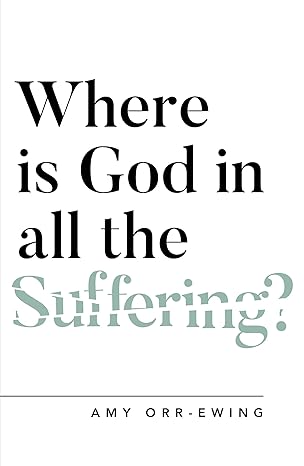
I began this book immediately after last week’s book, What if It’s True? The author. Amy Orr-Ewing, is an Oxford-educated, a writer, and director of an apologetics center. While she is a passionate layperson devoted to evangelism, she does not have the novelist’s eyes that Charles Martin has.
That made getting into this slim volume (130 pages) a little more challenging for me. The best parts of the book are where she relates her own experiences, or the experiences of others very close to her, in suffering. Her depiction of the Grenfell Tower fire opens the chapter on Anger. Anyone who keeps up with the international news remembers that – but many don’t know about the events in the week after – the service that she and her husband conducted for the survivors and community after. That moving story showcases God’s love for all those angry and in pain in that tragedy.
With these scenes from her life Orr-Ewing begins the chapters of this book. Each chapter focuses on a particular emotion or type of suffering: grief, sickness, natural disasters, violence, and more. In each chapter, after the opening, she looks at how Christians perceive God’s response. Where is He? She continually contrasts the materialist/atheist philosophy against what Christians believe. In the chapter on sickness, she writes:
But why should the physical frailty of our bodies hurt us at this almost transcendent level? Could our human experience of illness be a reminder, an indicator, that to be human is to be more than a material entity of molecules and atoms?
She reminds us that Hebrew poets from 3,000 years ago were asking God about this in words that Christians and Jews cherish today:
Hear my prayer, Lord; let my cry for help come to you. Do not hide your face from me when I am in distress.
Psalm 102: 1-2a
The Psalmist continues with vivid depictions of his illness:
My heart is blighted and withered like grass; I forget to eat my food. In my distress I groan aloud and am reduced to skin and bones.
Psalm 102: 4-5
This second book in my Lenten reading series made me realize anew the power of story to convey truth. A story captures our imaginations and brings us in. A listener or reader empathizes with the characters, perhaps cheering them on or watching in despair. Stories are what we remember – not lectures. After all, did not the greatest teacher ever known teach in parables?
I’ve been reading the book “What if It’s True?” by Charles Martin every morning as part of my devotional time this Lent. Martin wrote this book after he decided to take a fresh look at Scripture, reading it with the mindset: What if this can be trusted? What if this really, really is true? What if the King of the Universe is speaking to me through it? And – if that’s so, what should my response be?
Martin said of his motivation:
What if this Jesus, the One who walked out of the tomb shining like the sun, holding the keys of death and hades, is alive – in you? In me? I write fiction for a living, and that’s either the craziest thing I’ve ever heard, or the most important word ever spoken.
Introduction, What if It’s True?
His reading led him to beautiful epiphanies and moments of heartbreak, stories of how God’s word is working through him. Each chapter is about a different story from Jesus’ life. Each chapter ends with a prayer that Martin prayed and recorded. These prayers are so raw and intimate it pushes aside any of your pretenses. I wanted to kneel several times reading these prayers that he wrote.
I’m only ¾ of the way through, but so far, my favorite chapter is Chapter 10 – “No Gone is Too Far Gone.” As in every chapter, he sketches the scene or parable in the language and idiom of today. His retelling of the story of the Prodigal Son made me understand exactly how low that poor boy got – it was if I could taste those horrible slops the prodigal had to eat. And when the Father sees the son from far off, coming home – you feel that joy.
It’s not that the Scripture is unclear, but hearing the story over and over, in the same words of the ESV or NIV for so many years had dulled its power. Through his book, Martin allows me to glimpse the sheer joy of this parable – the minute the son repented, the Father forgave him. And forgave him so generously – no nonsense about working off his debt, acting as a servant in his house. He restored him to sonship. That is the beauty of repentance. It’s a big ask – to turn back to the Father, to deny ourselves – but the rewards are overwhelming.
Next up on my list is to finish my re-read of “The Great Divorce” by C.S. Lewis. My bookclub, The Inklings, is reading this classic this winter. I’ve read it several times, and each time I marvel at the description of a bus tour from Hell into Heaven, and the souls who are redeemed. It’s an exploration of Lewis’ complex thoughts on the possibility that Purgatory exists – and that some saved souls may need to be purified (or, in this book, “made solid”) in order to be able to withstand the holiness of Heaven. My favorite part is the description of the lady who was one of the “Great Ones” in Heaven. Who she was on Earth was quite a surprise to the traveler.
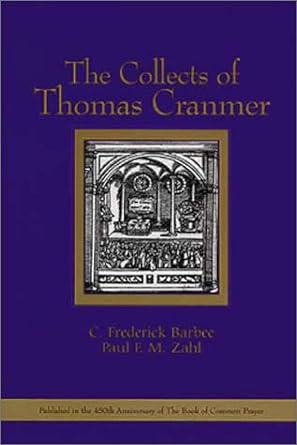
And new this year – I’m reading “The Collects of Thomas Cranmer.” Cranmer was the Archbishop of Canterbury who wrote the Book of Common Prayer, the greatest collection of prayers and services in the English language. He wrote different collects for every week of the liturgical year. These beautiful short prayers are composed of five parts: 1) the Address, 2) the Acknowledgement, 3) the Petition, 4) the Aspiration, and 5) the Pleading. Here’s one example – the famous Collect for Purity:
Almighty God,
unto whom all hearts are open, all desires known, and from whom no secrets are hid,
cleanse the thoughts of our hearts by the inspiration of thy Holy Spirit
that we may perfectly love thee, and worthily magnify thy holy name,
My friends asked me to do a devotion for the New Year at our community New Year’s Eve party. Here it is.
For the past few day, I’ve been searching for the perfect verse to illustrate a devotion. One that talks about hope, and plans. Of course, I thought about Jeremiah 29:11, and Ecclesiastes 3:1-8. Somehow, though, nothing gelled.
Then on Sunday, December 31, I found the passage – by listening in church. One of the things I love about my church is that it uses a lectionary, a prescribed series of readings for every day of the year, and especially Sundays. If you follow it, you’ll read through the whole Bible in two years. What’s nice about it is that 1) Anglicans all over the world are studying those verses the same day and 2) it forces you to read parts of the Bible you’d otherwise skip. We always have an Old Testament reading, a Psalm, a New Testament reading, and a reading from one of the Gospels. Sunday’s gospel passage, one of my favorites, spoke to me. I want to share it with you.
The reading is from the Gospel of John, starting in Chapter 1, verse 1, continuing through verse 18.
1 In the beginning was the Word, and the Word was with God, and the Word was God. 2 He was in the beginning with God. 3 All things were made through him, and without him was not any thing made that was made. 4 In him was life, and the life was the light of men. 5 The light shines in the darkness, and the darkness has not overcome it.
6 There was a man sent from God, whose name was John. 7 He came as a witness, to bear witness about the light, that all might believe through him. 8 He was not the light, but came to bear witness about the light.
9 The true light, which gives light to everyone, was coming into the world. 10 He was in the world, and the world was made through him, yet the world did not know him. 11 He came to his own, and his own people did not receive him. 12 But to all who did receive him, who believed in his name, he gave the right to become children of God, 13 who were born, not of blood nor of the will of the flesh nor of the will of man, but of God.
14 And the Word became flesh and dwelt among us, and we have seen his glory, glory as of the only Son from the Father, full of grace and truth. 15 (John bore witness about him, and cried out, “This was he of whom I said, ‘He who comes after me ranks before me, because he was before me.’”) 16 For from his fullness we have all received, grace upon grace. 17 For the law was given through Moses; grace and truth came through Jesus Christ. 18 No one has ever seen God; the only God, who is at the Father’s side, he has made him known.
John 1:1-18
There’s so much in that passage we could just meditate on it all day! But as I listened to it, and read it and pondered it later, I realized that this passage covers so many of the themes we associate with the New Year.
Hope
Verse 5 tells us that the “Light shines in the darkness, and the darkness has not overcome it.” That is a major reason for hope there.
When I start to think about this new year before us, I can get pretty wound-up thinking about all the things that could go wrong. Will the election go off smoothly? Will we have riots this summer like we did in 2020? Will the wars going on now intensify?
But then I read verse 3: “All things were made through him and without him was not any thing that was made.” I realize – the creator of the Universe is still with us, and He’s got this. We can be confident of his love for us, because after all, as verse 14 tells us: “the Word became flesh and dwelt among us.” God loved us so much he became man by sending us his son, Jesus. No matter what the year throws at us, we can have His peace.
Most importantly, verse 12 reminds us that anyone who believes in His name is given the right to become a child of God. How amazing! What’s even better – we don’t have to earn that right. In fact, we cannot earn it. Verse 13 goes on to say that these children were “born not of blood, nor of the will of the flesh, nor of the will of men, but of God.” We don’t do anything. We receive a gift.
Peace
Knowing that anyone who receives Jesus, who believes in His name, has salvation, is the key to peace. That takes away my anxieties when I remember that. Let’s remind ourselves often this year, that whatever we face, we face as children of the Living God, who came to Earth to be with us, and who loves us so much that “from his fullness we have all received grace upon grace.” This is how we can be happy in 2024!
Note to all my Keto post readers: Every once in a while I post something else. I also like gardening and books, in addition to Keto. If you only want to read Keto posts, just click on the “Keto” category in the top menu.
In Drawing Lines: Why Conservatives Must Begin to Battle Fiercely in the Arena of Ideas, Kira Davis issues a call to action: take your stand, make a difference in the fight for our culture. For the past few decades, our society has defaulted to liberal values everywhere: media, books, television, and universities. Kira is telling conservatives it is time: time to stand up, speak out, make your position known. Push back whenever and wherever you can. Her writing voice is the same as her podcasting voice: friendly, encouraging, with stories from her own life that make you laugh and make you think.
Kira weaves her personal story in between chapters on women’s rights being pushed aside, schools and corporations going woke, and critical race theory. Growing up a liberal, she believed everything that left taught, and she thought the Right was just as evil as they were painted by mainstream media commentators. Volunteering at an afterschool tech center program for kids made her start to question how effective the education system was. No matter how much money was poured into the schools, test scores and passing grades never improved. Worse, the only solution that the left offered was “spend more money.”
After realizing that, Kira started questioning more of her political positions. For the past several years she’s been a conservative commentator, one who has “built a brand on reaching out to the other side, on giving people space to be wrong, the space to discuss, the space to tolerate.” Sadly, she admits that it is now time for conservatives to question the liberal zeitgeist.
In each chapter she gives suggestions for how you, the reader, can make your voice heard. Whether it’s going to a school board meeting, running for office (like she did) or writing to your representatives, she outlines the many ways conservatives can say, ‘hey, we’re here. This is our country too, and you can’t cancel us.’
Kira ends the book by ‘taking it to church’, as she says on her podcast. Her strong Christian faith undergirds everything she does. One of her core beliefs is that just below the surface of each societal fad is a soul longing to take the place of God, to make himself God. Having a faith in something greater than yourself allows you to reject the notion that government or politics is your Lord. As she says:
It’s very freeing when you can accept perfection is divine, and you have no way to get there on your own. It’s no wonder progressives are always so cranky. They sense they’ll never get to where they’re going.
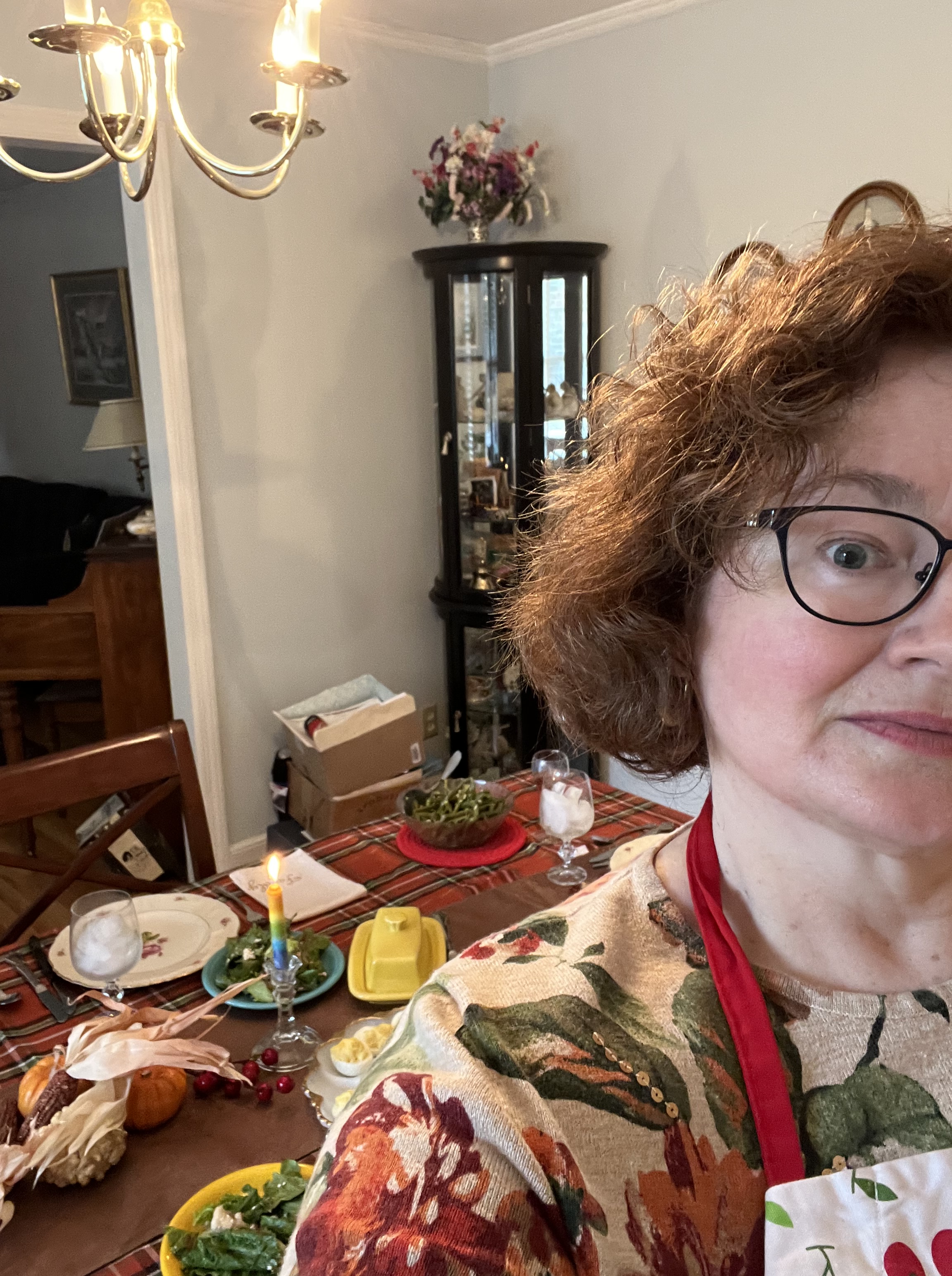
Life has been very, very, busy at Aunt Gem Manor since the week of Thanksgiving. But I did take a few pictures of the beautiful Thanksgiving feast, and wanted to share them with you.
First, a nice setting is always key. I only get to use this runner once a year. Next year, a cornucopia!
Candles, gift from my friend Jill. Corncobs and gourds, Hobby Lobby.Love those turkeys
Loved making the desserts beforehand. I couldn’t believe Publix didn’t have any pecan pies. So I made my first pecan pie.
Click for full crusty goodness.And nobody ate this!
The feast itself, with only slightly frazzled cook.
I ended up putting crackers and cheese on the big plate.
My quest to draw closer to Jesus continues, no matter where I go. At times I’m very good about devotions in the morning, praying and reading my Bible; most of the time, I honor daily devotions in the breach by thinking about it for a few minutes. And then feeling guilty. Every time I deviate from my ideal I realize that I’m falling away from relationship with the Lord. He doesn’t move away from me; I’m the one straying. That’s one of the reasons I’m so grateful for the Anglican Book of Common Prayer. The structured Morning Prayer, Evening Prayer, and sometimes Compline have been a super way to keep me praying, reading Scripture, and spending time with God. Not that I do them all the time. Like I said, I’ve been much better at observing them as something I should do.
I decided to get a leather-bound copy of the 2019 Book of Common Prayer. Built to last!
When I discovered podcasts devoted to morning prayer, I was thrilled. Finally – a way to listen to Morning Prayer while walking my dog! (Usually, I’m listening to something that isn’t filling my head with good news.) CotA’s church plant, All Souls, created the wonderful 10-minute podcast Lord, Open My Lips and I use that. Another way I’m focusing on God is to go to the Wednesday morning Eucharist our church offers. I’d been off and on, but on my birthday last October, I decided my goal for the next year was to go each week. I’ve been more often than not and I’m keeping on.
It’s not usual to find an Anglican running around in my part of the South; anybody seeking out liturgy is usually an Episcopalian. Most of my friends today in Columbia are Southern Baptist. That only makes sense, because 1) I spent 20 years in a Southern Baptist church, and 2) the top three religions in South Carolina are Baptist, Methodist, and SEC Football. But over the years my spiritual journey, ever since I was 12, has led me to going to where I truly think the Spirit of Truth is. I felt that in my time with Wesley Monumental, with Lamb’s Chapel, and then RHBC. Right now, that is in the Church of the Apostles, a member of the ACNA. In my Apostles 101 class I loved how our past Dean (that’s a fancy Anglican word for the head priest at the cathedral church of the Diocese) described the church: the place where the Scriptures are rightly taught and the Sacraments observed. At least that’s how I remembered the saying. And everywhere I’ve gone, I’ve been looking for a place that carefully paid attention to the Bible and actually believed it.
I think I’ll end my journey written journey here, with part 7. It is, after all, the perfect number.
This is the next-to-last post in this series. If you need to catch up, just look at the previous five weeks of posts!
It started with an Excel spreadsheet. Wait: before the Excel spreadsheet, there was an unfortunate administration change at my old church. RHBC’s beloved senior pastor was retiring after a long career. And the new guy was (is) hard-charging, young, enthusiastic, with clear vision and purpose. Unfortunately, his vision didn’t include the outstanding choir director who had led our choir for the past 10+ years. After he was shown the door, I waited until Christmas, to sing in one last Christmas cantata. (I wouldn’t have done that again to witness the chaos resulting from a choir that wasn’t fully in sync with the director and vice versa – missed cues, botched songs. Ah, schadenfreude!) I waited some more, thinking we’d get a new permanent choir leader and everything would start afresh. When that didn’t happen, and the temporary director became the director, my last day was Easter Sunday 2018.
Here’s where the Excel spreadsheet came in. I put together a list of the requirements I was looking for in a church and decided to start visiting around. Here’s what I put them on a spreadsheet:
















 Notes from Aunt Gem